UPSC Civil Services Exam explained: stages, papers, marks, eligibility and how the selection works
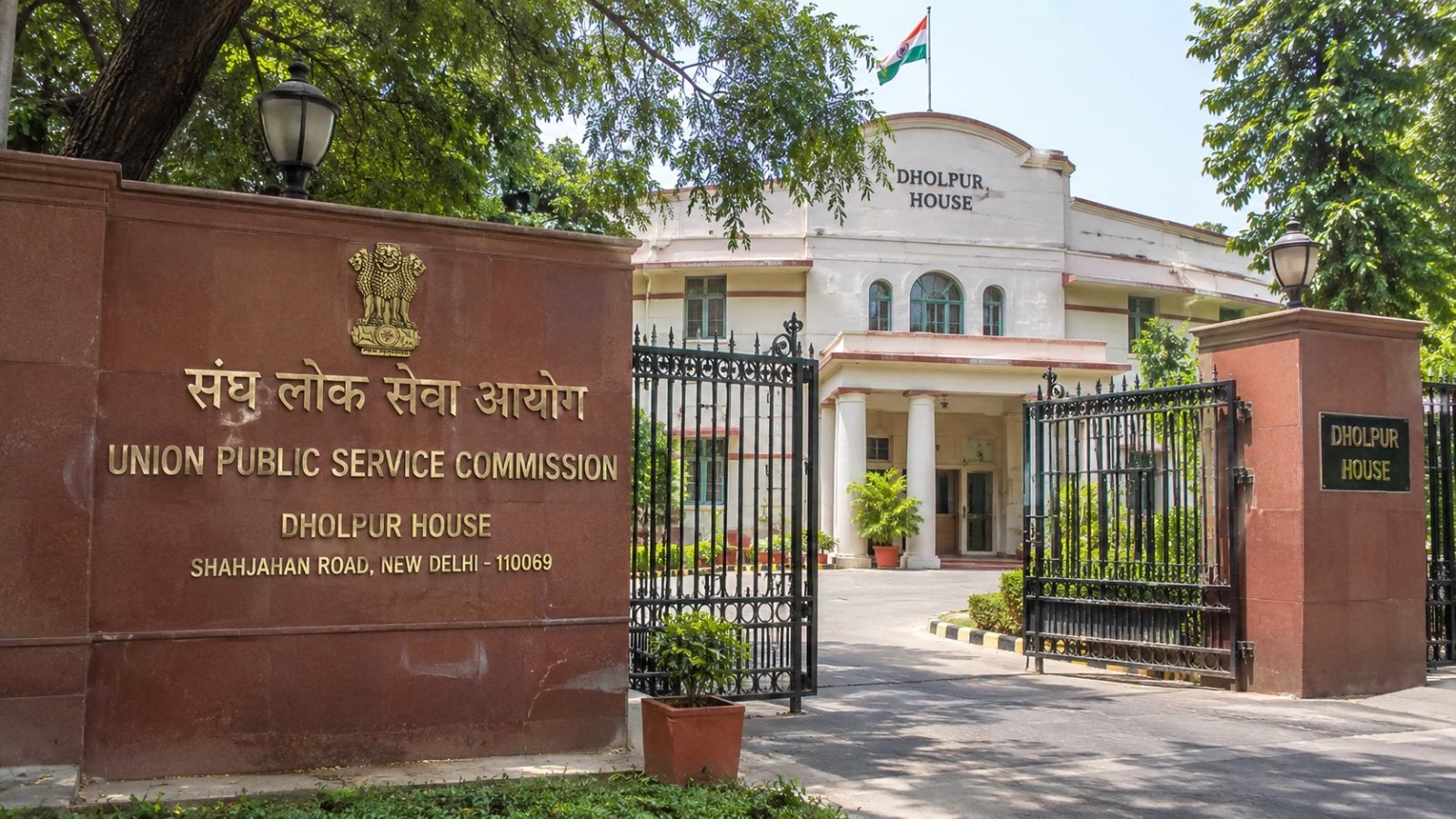
Every year, lakhs of young Indians fill the form for the Civil Services Examination (CSE) conducted by the Union Public Service Commission (UPSC). Only around a thousand finally get selected. It is often called the toughest exam in India, and with good reason: it tests not just what you know, but how you think, write and conduct yourself. If you are just starting out, the first step is to understand the exam itself, its stages, papers, marks and rules. This guide explains everything in one place.
What is the UPSC Civil Services Examination?
The Civil Services Examination is a national-level recruitment exam conducted once a year by UPSC, a constitutional body under Article 315 of the Constitution. Through this single exam, candidates are recruited to more than twenty All India and Central Services.
The most well-known are the three All India Services: the Indian Administrative Service (IAS), the Indian Police Service (IPS) and the Indian Forest Service (IFoS, which has a separate main exam but a common prelims). Along with these, the CSE also recruits for the Indian Foreign Service (IFS), the Indian Revenue Service (IRS, both Income Tax and Customs and Indirect Taxes), the Indian Audit and Accounts Service, the Indian Railway Management Service, and several other Group A and Group B Central Services, including DANICS and DANIPS.
Eligibility: who can apply?
Educational qualification: A graduation degree from a recognised university, in any stream. Final-year students can also apply for the Preliminary exam, but must show proof of passing at the time of the Main exam.
Age limit: The candidate must be at least 21 years old and not more than 32 years old (General and EWS category) on 1 August of the exam year. Relaxations are given for reserved categories: up to 35 years for OBC, up to 37 years for SC and ST, and an additional 10 years for Persons with Benchmark Disability (PwBD). There are also relaxations for ex-servicemen and some other groups.
Number of attempts: General and EWS candidates get 6 attempts. OBC candidates get 9 attempts. SC and ST candidates have unlimited attempts within the age limit. PwBD candidates in the General, EWS and OBC categories get 9 attempts. Appearing in even one paper of the Preliminary exam counts as an attempt.
Nationality: For IAS, IPS and IFS, a candidate must be a citizen of India. For other services, certain categories of non-citizens (such as subjects of Nepal or Bhutan) may be eligible under specific conditions.
The three stages of the exam
The CSE is held in three stages, one after the other:
1. Preliminary Examination (Prelims): objective type, a screening test.
2. Main Examination (Mains): descriptive (written answers).
3. Personality Test (Interview).
Only those who clear one stage move on to the next. The final merit list is prepared on the basis of Mains and Interview marks only.
Stage 1: Preliminary Examination
The Prelims is usually held in late May or June. It has two compulsory papers, both objective type (multiple choice questions), held on the same day.
General Studies Paper I: 200 marks, 100 questions, 2 marks each, 2 hours. This paper covers current events of national and international importance, history of India and the Indian National Movement, Indian and world geography, Indian polity and governance, economic and social development, environment, biodiversity and climate change, and general science.
General Studies Paper II (CSAT): 200 marks, 80 questions, 2.5 marks each, 2 hours. This paper tests comprehension, interpersonal and communication skills, logical reasoning and analytical ability, decision making and problem solving, general mental ability, and basic numeracy and data interpretation of Class 10 level.
Negative marking: For every wrong answer, one-third of the marks assigned to that question is deducted. That means about 0.66 marks are cut for a wrong answer in GS Paper I and about 0.83 marks in CSAT. There is no penalty for unanswered questions.
Qualifying nature: CSAT is only qualifying. You must score at least 33 percent (66 out of 200) in it. Your rank for moving to Mains depends only on your GS Paper I score, which must cross the cut-off set by UPSC that year.
Important: Prelims marks are not added to the final merit. Prelims is only a filter. Roughly 12 to 13 times the number of vacancies are selected for the Mains.
Stage 2: Main Examination
The Mains is usually held in August or September. It is a written exam of nine papers, each of 3 hours. This is where the real competition happens, because these marks count directly for your final rank.
Qualifying papers (marks not counted in merit):
Paper A: One Indian language chosen from the Eighth Schedule of the Constitution, 300 marks.
Paper B: English, 300 marks.
You must score at least 25 percent (75 marks) in each of these. Candidates from some north-eastern states and candidates with certain disabilities are exempted from Paper A. If you fail these qualifying papers, your other papers are not evaluated.
Papers counted for merit (total 1,750 marks):
Paper I: Essay, 250 marks. You write two essays of about 1,000 to 1,200 words each, one from each of two sections.
Paper II: General Studies I, 250 marks. Indian heritage and culture, history and geography of the world and society.
Paper III: General Studies II, 250 marks. Governance, Constitution, polity, social justice and international relations.
Paper IV: General Studies III, 250 marks. Technology, economic development, biodiversity, environment, security and disaster management.
Paper V: General Studies IV, 250 marks. Ethics, integrity and aptitude, including case studies.
Paper VI: Optional Subject Paper 1, 250 marks.
Paper VII: Optional Subject Paper 2, 250 marks.
Optional subject: Candidates choose one optional subject from a list of 48 subjects, which includes subjects such as Geography, History, Political Science and International Relations, Public Administration, Sociology, Anthropology, Economics, Law, Mathematics, Physics, Medical Science, and the literature of many Indian languages and English. Most toppers advise choosing an optional based on interest, background and availability of guidance, not on rumours about which subject is "scoring".
Medium: Candidates can write the Mains in English or in any of the languages in the Eighth Schedule, including Hindi. The Interview can also be given in the same language.
Stage 3: Personality Test (Interview)
Candidates who clear the Mains are called for the Personality Test, held at the UPSC office (Dholpur House) in New Delhi, usually between January and April. It carries 275 marks.
The board, chaired by a UPSC member and including experts, tries to assess whether the candidate is suitable for a career in public service. They look for mental alertness, critical thinking, clear and logical expression, balance of judgement, variety and depth of interest, leadership qualities, and intellectual and moral integrity. Questions often come from the Detailed Application Form (DAF), which contains your education, hometown, hobbies and service preferences, along with current affairs and situational questions.
There is no minimum qualifying mark in the interview, but because the gap between ranks is often small, a good interview score can change your rank and service significantly.
Final marks and merit list
The final merit is calculated out of 2,025 marks:
Main Examination (written): 1,750 marks.
Personality Test: 275 marks.
Total: 2,025 marks.
Based on the final rank, category, service preferences and vacancies, candidates are allocated services and, for the All India Services, cadres (states). The final result is usually declared around April or May, almost a year after the Prelims.
The yearly cycle at a glance
Notification and online application: usually January or February. As per the UPSC calendar, the notification for CSE 2027 is scheduled for 13 January 2027 on the official portal.
Preliminary exam: May or June.
Prelims result: about two weeks to a month later.
Main exam: August or September.
Mains result: November or December.
Personality Test: January to April.
Final result: April or May.
The entire process takes about a year. That is why serious aspirants plan their preparation over 12 to 18 months.
Recent changes every aspirant should know
New online application system: In 2025, UPSC replaced its old One-Time Registration (OTR) platform with a new online application portal. Always apply only through the official UPSC website.
Rules for those already in service (CSE 2026): Under the rules for CSE 2026, officers already appointed to the IAS or the Indian Foreign Service through an earlier exam and still in service cannot appear again. Serving IPS officers can appear, but cannot get the IPS again. Candidates allocated the IPS or another Group A service can try once more only after taking a one-time exemption from training. Check the latest notification for the exact rules every year, because they can change.
What happens after selection?
Selected candidates join training. IAS and many other services begin with a Foundation Course at the Lal Bahadur Shastri National Academy of Administration (LBSNAA), Mussoorie, followed by service-specific training. IPS officers train at the Sardar Vallabhbhai Patel National Police Academy, Hyderabad. Other services train at their own academies. IAS officers usually start their field career as Sub-Divisional Magistrates (SDM) or Assistant Collectors after training.
How to begin your preparation
1. Read the official syllabus carefully and keep it with you. It is your map.
2. Build your basics from NCERT books (Classes 6 to 12) for history, geography, polity, economy and science.
3. Read one good newspaper daily and make short notes for current affairs.
4. Solve previous years' question papers (PYQs) of both Prelims and Mains. They show what UPSC actually asks.
5. Start answer writing early. Mains is a writing exam, and practice matters more than reading one more book.
6. Choose your optional subject carefully and finish it once before Prelims.
7. Take mock tests for Prelims and keep a check on CSAT, because many strong candidates fail it by ignoring it.
8. Stay consistent. In UPSC, steady daily effort over months beats occasional long hours.
Conclusion
The UPSC Civil Services Examination is long, demanding and uncertain, but it is also fair and transparent. It does not care about your college name or your family background. It rewards understanding, clarity of thought, honest effort and the ability to stay calm under pressure. Once you understand the structure of the exam, preparation stops feeling like a mountain and starts looking like a path, one stage at a time.
Always check the latest official notification at upsc.gov.in before applying, as rules, dates and vacancies are announced afresh every year.
Exam rules, dates and vacancies are notified afresh by UPSC every year. Please confirm details with the latest official notification at upsc.gov.in.